


From Social Events to Social Wellbeing: A Better Way to Build Team Connection
- Victoria Isikman
- Feb 9
- 5 min read

Let's talk about something that keeps showing up in every HR conversation lately.
Social wellbeing.
It's on every wellness platform checklist. Every employee survey. Every leadership retreat agenda.
And yet: most companies are still addressing it with the same tired playbook: traditional social events, pizza parties, and awkward icebreakers that make half the room want to disappear.
Here's the thing. Your people aren't craving more small talk or forced fun.
They're craving real connection. The kind that makes them feel seen. Safe. Like they actually belong somewhere.
That's what social wellbeing really means. And in 2026, the companies getting it right are approaching it very differently.
What Social Wellbeing Actually Means (Hint: It's Not Casual Mixers on Fridays)
Social wellbeing isn't about how many events you throw.
It's about the quality of connection people experience at work. It's psychological safety. It's belonging. It's the feeling that you can show up as yourself: without performing, without masking, without exhausting yourself just to fit in.
Research shows that 62% of employees now cite community and social support as essential for sustaining long-term wellness habits. They're not asking for more parties. They're asking for meaningful interaction that actually fills their cup.
And here's where it gets tricky.
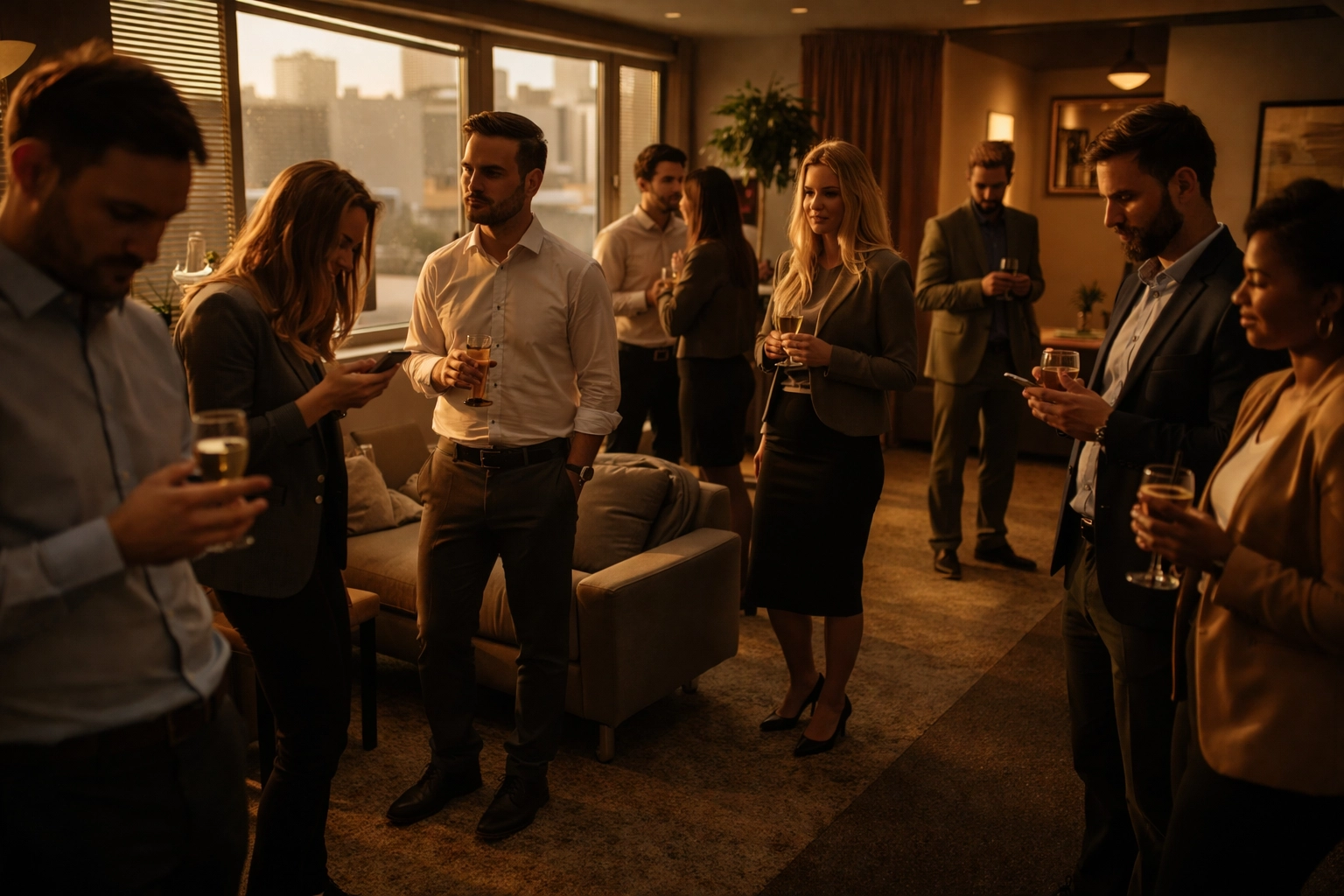
Traditional social events: casual mixers, team lunches, holiday parties: often do the opposite. They create pressure. They favor extroverts. And for many people, they feel more draining than connecting.
That's not social wellbeing. That's social obligation dressed up as culture.
Why Unstructured Gatherings Aren't Working Anymore
Think about your last unstructured gathering.
Who showed up? Who stayed for a few minutes and quietly slipped out? Who skipped it entirely because the thought of small talk after a long day felt unbearable?
Unstructured gatherings assume everyone recharges the same way. They assume connection happens naturally when you put people in a room with snacks and background chatter.
But connection doesn't work like that.
Real connection requires:
A shared experience that levels the playing field
Low-pressure participation (no one should feel "watched")
Space for quieter voices to emerge
An invitation to be present: not perform
Most traditional team socials miss all four.
And with hybrid and remote work now the norm, the challenge gets even harder. Digital connectivity alone isn't cutting it. People are more connected than ever on screens: and more isolated than ever in their actual experience of work.
A Better Approach: Structured, Facilitated Creative Experiences
Here's what we've seen work beautifully.
Instead of throwing people into unstructured gatherings and hoping magic happens, you create a container for connection. A facilitated experience where the pressure is off, the playing field is level, and something unexpected can emerge.
That's where creative workshops come in.
Not the kind where everyone's secretly comparing canvases.
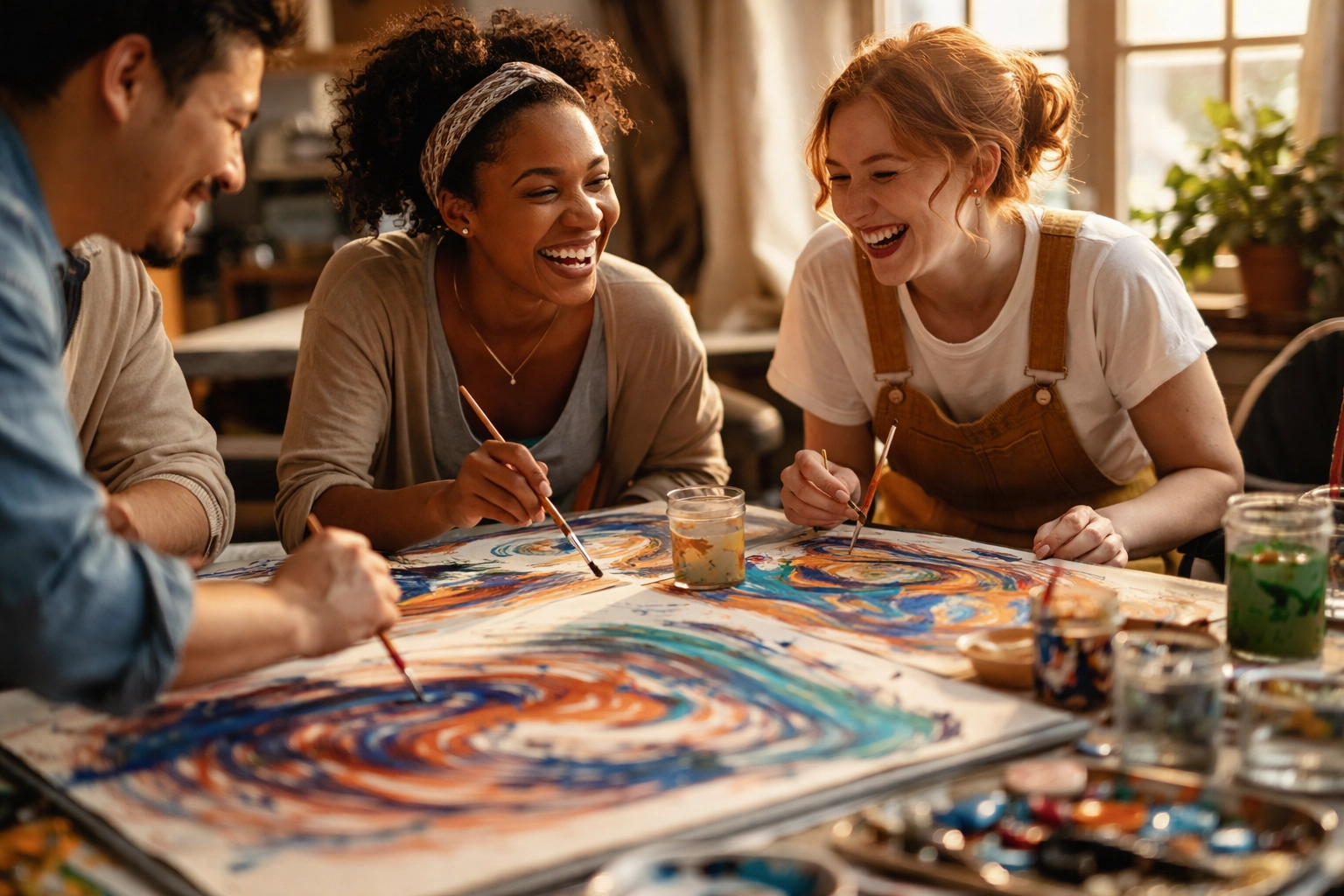
We're talking about abstract, process-focused art experiences where there is no right or wrong. No artistic skill required. No pressure to produce something "good."
Just hands moving. Color flowing. Breath slowing down.
And in that space: something shifts.
People start talking differently. Laughing more easily. Sharing things they wouldn't normally share in a conference room. Walls come down. Guards drop. Real connection becomes possible.
Why Abstract Art Creates Psychological Safety
Abstract art removes the comparison trap.
When there's no "correct" outcome, there's nothing to fail at. When everyone is a beginner, hierarchy dissolves. The CEO and the newest team member are equally out of their comfort zone: and equally free to play.
This creates psychological safety in a way that traditional social events simply can't.
✔ No one is "good" or "bad" at it ✔ There's no performance to evaluate ✔ The focus is on process, not product ✔ Vulnerability becomes normalized
And when vulnerability is normalized, belonging follows.
This is the real work of social wellbeing. Not more events on the calendar: but more moments where people feel genuinely safe to connect.
What This Looks Like in Practice
At VFA Creative Events, we design fully facilitated creative workshops specifically for corporate teams.
Here's what that means:
You don't need to plan anything. We handle the supplies, the setup, the facilitation, and the cleanup. Your team just shows up.
No art experience required. We say this a lot because it matters. These workshops are designed for people who haven't picked up a paintbrush since elementary school. That's actually the sweet spot.
The facilitation is everything. Our sessions are guided to create flow, ease, and natural conversation. We know how to hold space so your team can relax into the experience: without awkwardness, without pressure.
It works for any team size or setting. In-office. Offsite retreats. Hybrid-friendly options. We meet your team where they are.
Practical Tips for Leaders Ready to Rethink Social Wellbeing
You don't have to overhaul your entire culture overnight. But you can start shifting toward more meaningful connection with a few intentional moves:
1. Audit your current "social" calendar. How many of your team events center on alcohol? How many favor extroverts? How many actually create space for real conversation?
2. Prioritize facilitated over unstructured. Unstructured social time works for some people: but it leaves many feeling awkward or invisible. Facilitated experiences create equity.
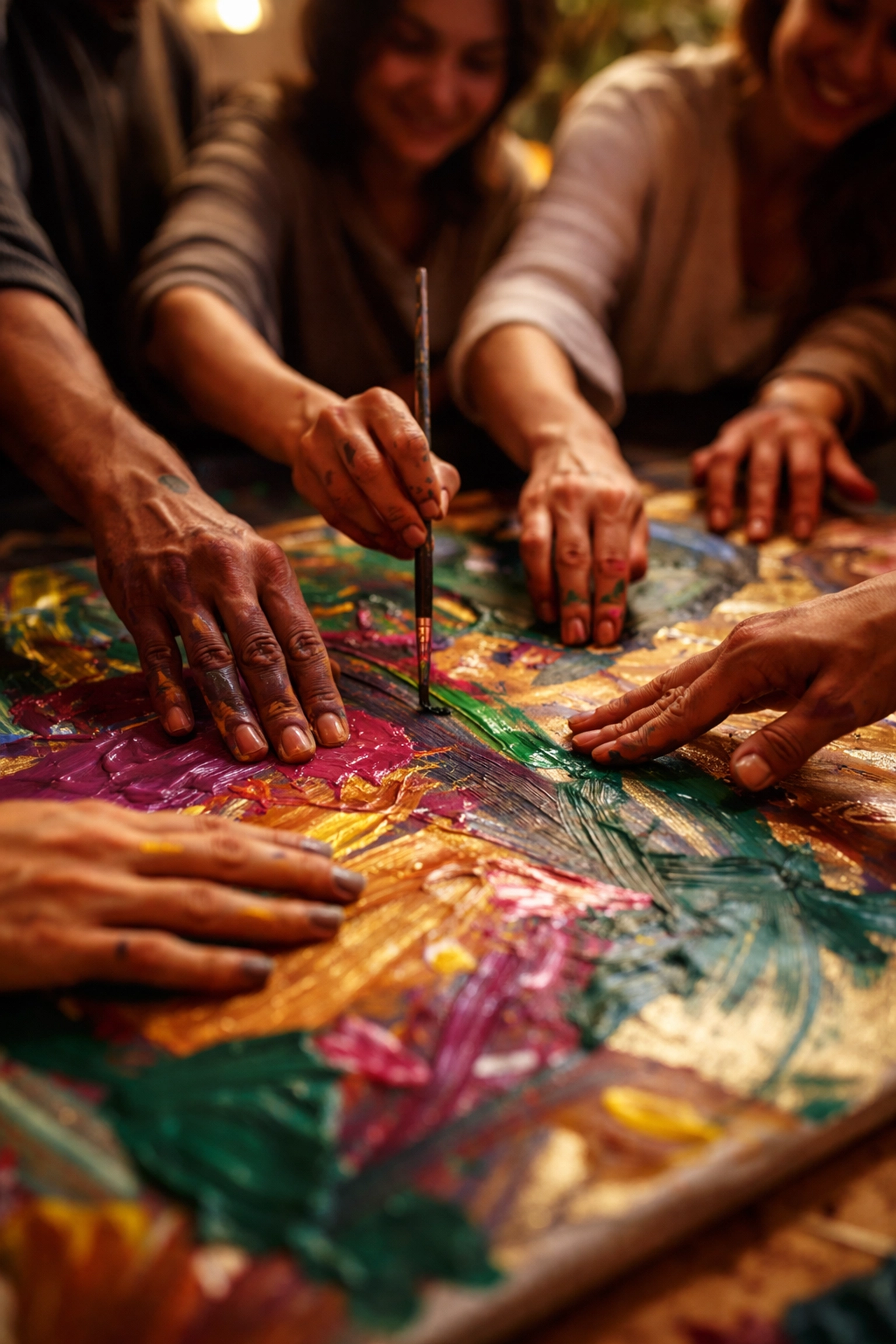
3. Think sensory, not just social. Experiences that engage the hands, eyes, and body (not just conversation) help people drop out of "work mode" and into presence. This is where real connection lives.
4. Make it optional: but make it appealing. Mandatory fun is never fun. But when you offer something genuinely different and low-pressure, people want to show up.
5. Create rituals, not just events. One-off traditional social events don't build culture. Recurring creative experiences: quarterly workshops, retreat traditions: create something people look forward to and remember.
How VFA Workshops Support Social Wellbeing
Our corporate creative workshops are designed with all of this in mind.
We offer packages for:
Team meetings and quarterly resets
Leadership retreats and offsites
Employee appreciation events
Wellness programming and mental health initiatives
Hybrid and remote-friendly experiences
Every session is fully facilitated, completely pressure-free, and customized to your team's needs.
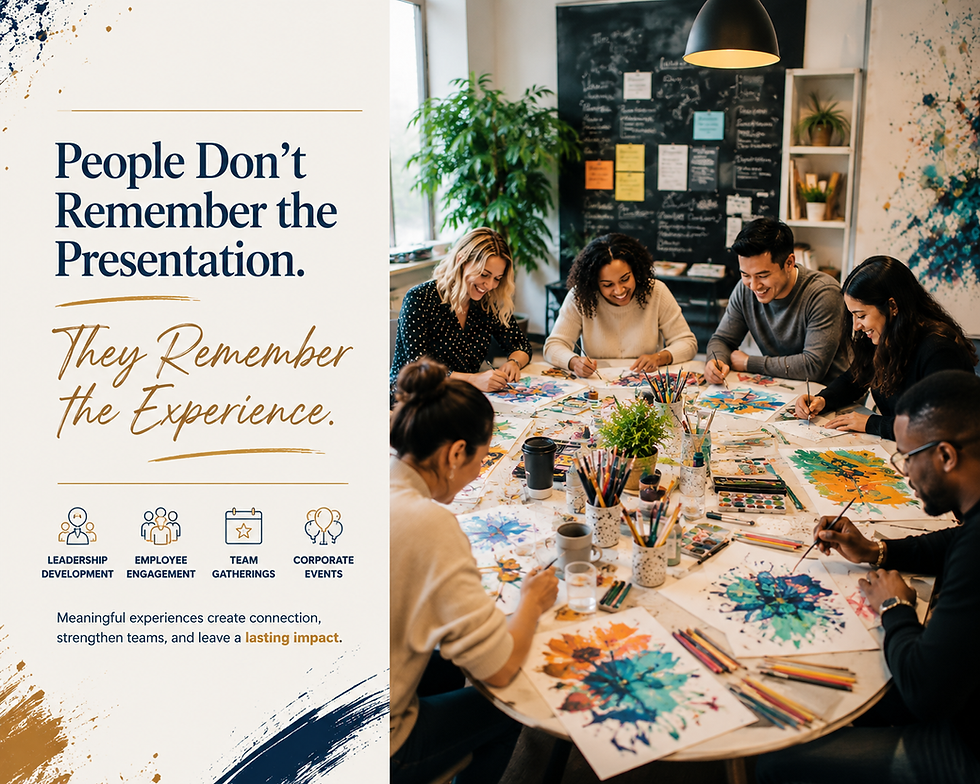
No one leaves feeling judged. Everyone leaves feeling lighter. And something real happens in the room: connection that actually lasts beyond the event itself.
The Invitation
Social wellbeing isn't a line item. It's not a pizza budget or a traditional social events calendar.
It's the quality of connection your people experience every day. It's whether they feel safe enough to be themselves. It's whether they leave work feeling more human: or more depleted.
In 2026, the companies building thriving cultures are the ones paying attention to this.
Not with more events. With better ones.
If you're ready to explore what this could look like for your team, we'd love to talk.
✨ Explore our corporate workshop packages and book a consultation.
Let's create something meaningful together.


Comments