Social Wellbeing as a C-Suite Priority: Why It's Not About Happy Hour
- Victoria Isikman
- Feb 10
- 5 min read

Let's be honest.
The Friday happy hour isn't fixing anything.
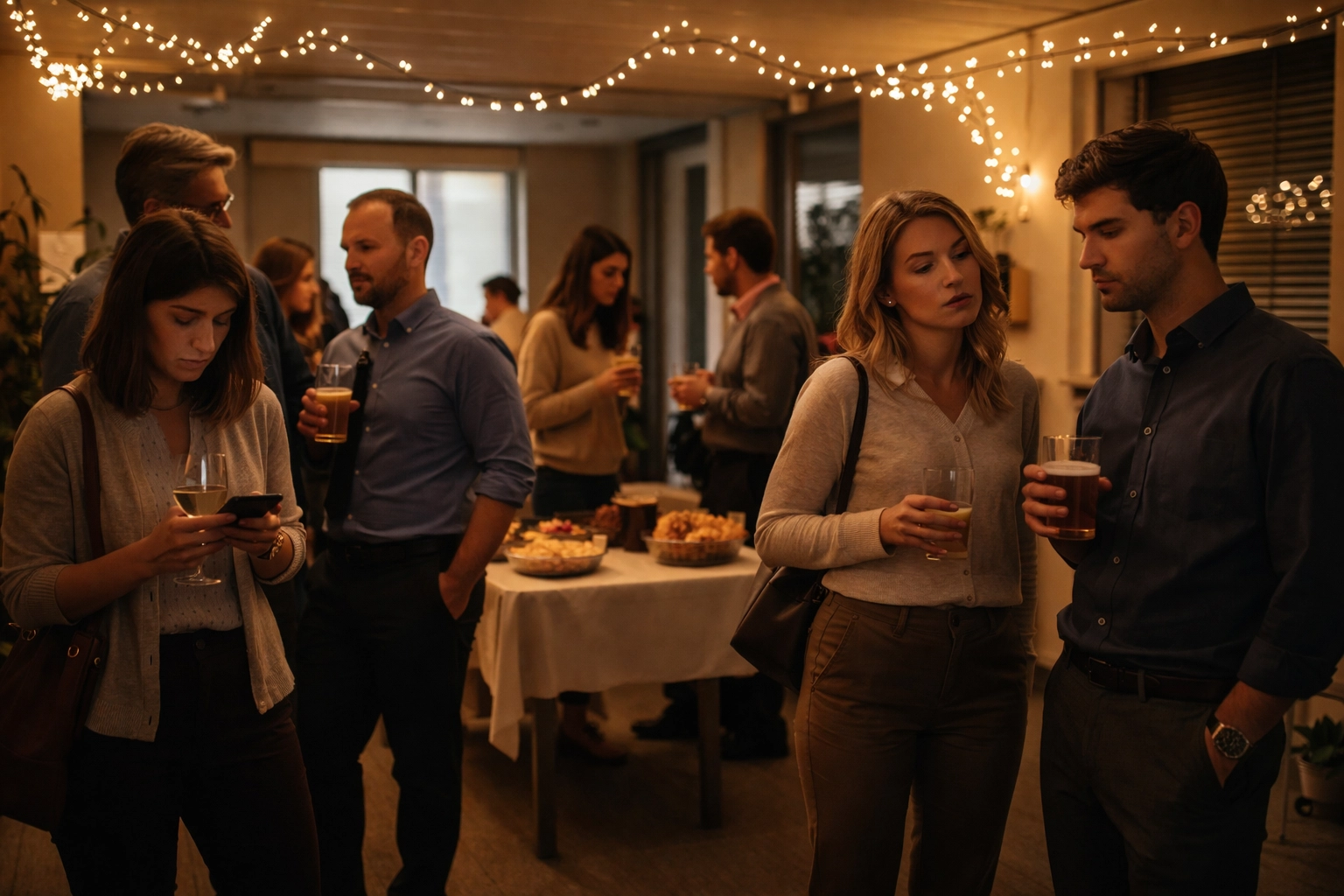
Your team shows up. They hold a drink. They make small talk near the snack table. And by Monday morning, nothing has changed.
The disconnection is still there. The burnout is still humming underneath. The silos between departments? Still standing.
If you're a C-suite leader, HR director, or People & Culture professional who's been pouring budget into "social events" that feel flat… you're not imagining things.
Something is missing.
And in 2026, organizations are finally naming it: social wellbeing.
Not happy hour. Not pizza parties. Not forced fun.
Real, human connection that actually moves the needle on how people feel, and perform, at work.
What Is Social Wellbeing, Really?
Social wellbeing isn't a buzzword.
It's the quality of connection your people experience with each other. It's whether they feel seen, supported, and safe enough to collaborate without performing.
It shows up in small moments:
A team that can disagree without defensiveness.
A new hire who feels welcomed, not just onboarded.
A manager who notices when someone's struggling, and says something.
When social wellbeing is strong, people stay longer. They contribute more. They actually want to be in the room together.
When it's weak? You feel it everywhere.
Silos. Turnover. Quiet quitting. Meetings where no one says what they're really thinking.

Why the C-Suite Is Paying Attention Now
Here's the shift: social wellbeing is no longer a "nice to have."
It's a business metric.
In 2026, executive teams are connecting the dots between workplace connection and hard outcomes like:
Retention. People don't leave companies. They leave cultures where they feel invisible.
Engagement. Disconnected teams underperform. It's not a morale issue, it's a productivity issue.
Healthcare costs. Loneliness and chronic stress show up in claims, absenteeism, and long-term disability.
The research is clear: organizations that invest in authentic connection, not performative gestures, see measurable returns in engagement, retention, and employee advocacy.
This isn't soft stuff anymore.
It's operational infrastructure.
And the leaders who understand this are building social wellbeing into their budgets, their leadership expectations, and their definition of success.
The Problem With Perks-Based "Connection"
Let's talk about why happy hour doesn't work.
It's not that social events are bad. It's that they often ask people to connect while still performing.
Think about it.
At a networking event or office party, there's an unspoken pressure to:
Be "on."
Make a good impression.
Navigate hierarchy.
Avoid saying the wrong thing.
That's not connection. That's code-switching with a cocktail.
True social wellbeing requires something different.
It requires spaces where people can drop the performance.
Where there's no right or wrong answer. No competition. No need to be clever or polished or "professional."
Just presence. Just being human together.
What Meaningful Connection Actually Looks Like
So what creates that kind of space?
It's not about the activity itself. It's about the conditions the activity creates.
Meaningful connection happens when:
✔ There's a shared, low-stakes experience. Everyone is a beginner. No one has an advantage.
✔ The focus is on process, not outcome. It's not about winning or producing something impressive.
✔ Conversation happens naturally. Side-by-side, not face-to-face interrogation.
✔ The nervous system can actually relax. No screens. No notifications. No performance pressure.
This is why analog, hands-on creative experiences work so well in corporate settings.
When your team is mixing colors, moving brushes, and focusing on something tactile: something happens.
The room softens.
People breathe.
Conversation gets easier.
And connection comes back online.
How VFA Workshops Create Space for Real Connection
At VFA Creative Events, we design experiences specifically for this.
Not team-building games. Not trust falls. Not icebreakers that make everyone cringe.
Guided creative workshops where your team can:
Slow down together.
Create something with their hands.
Talk: or not talk: without pressure.
Experience each other as humans, not just colleagues.
No art experience required. No talent necessary.
There is no right or wrong.
Just presence. Just flow. Just connection.

Our facilitators hold the space so your team can let go. We handle the supplies, the setup, the pacing: so you can simply show up and exhale.
Whether your team is five people or fifty, we meet you where you are.
Packages Designed for Your Team Size
We offer flexible options to fit your organization's needs:
✨ Creative Workshop (5–10 people)
Perfect for leadership teams, small departments, or intimate gatherings. An immersive, hands-on session where every person gets individualized attention and the group can truly bond.
✨ Corporate Event (up to 25 people)
Ideal for cross-functional teams, quarterly resets, or department-wide experiences. Enough scale to bring people together across silos: while still maintaining that intimate, pressure-free atmosphere.
✨ Large Corporate Event (up to 50 people)
For company-wide initiatives, retreats, or wellness days. We bring the same warmth and intentionality to larger groups, ensuring no one feels lost in the crowd.
Every session is tailored to your goals. Whether you're focused on team cohesion, burnout recovery, or simply giving your people a breath of fresh air: we design accordingly.
Leaders Set the Tone
Here's something worth naming.
Social wellbeing doesn't become a priority just because HR puts it on the agenda.
It becomes real when leaders model it.
When executives show up to a creative workshop: not to observe, but to participate.
When managers admit they're tired too.
When the C-suite visibly prioritizes presence over productivity, even for an afternoon.
Research shows that when leaders transparently prioritize their own capacity and demonstrate vulnerability, it signals to the entire organization that connection and wellbeing are legitimate values: not weaknesses.
Your team is watching.
What you prioritize, they believe matters.

The Loneliness Crisis Is a Business Crisis
One more thing worth saying out loud.
We're in the middle of a loneliness epidemic: especially among younger workforce members.
And loneliness isn't just a personal struggle. It shows up in:
Lower collaboration.
Reduced psychological safety.
Resistance to change.
Quiet disengagement that spreads.
Strong interpersonal connections aren't just good for morale. They increase adaptability, innovation, and resilience.
In a world that keeps changing faster, the organizations that invest in human connection will be the ones that thrive.
Not because it's nice.
Because it's strategic.
An Invitation
If you've made it this far, you probably already sense it.
Something needs to shift.
Not another perk. Not another program.
Something deeper. Something human.
We'd love to help you create that.
No pressure. No pitch.
Just a conversation about what your team actually needs: and whether a creative reset might be the right fit.
Let's create something meaningful together.
Comments