

Conference Icebreaker Alternatives for Corporate Teams

Most conference attendees can predict traditional icebreakers before they even begin.
“Tell us a fun fact about yourself.”“Network with three new people.”“Share your biggest professional challenge.”
By the second activity, people are checking their phones.
The problem isn’t that icebreakers are inherently bad. The problem is that many feel forced, repetitive, and disconnected from how humans naturally build comfort with each other.
Corporate teams today are also experiencing higher levels of social fatigue than before. After years of virtual meetings and constant digital interaction, many employees feel drained by performative networking.
That’s why conferences are increasingly shifting toward more organic forms of engagement.
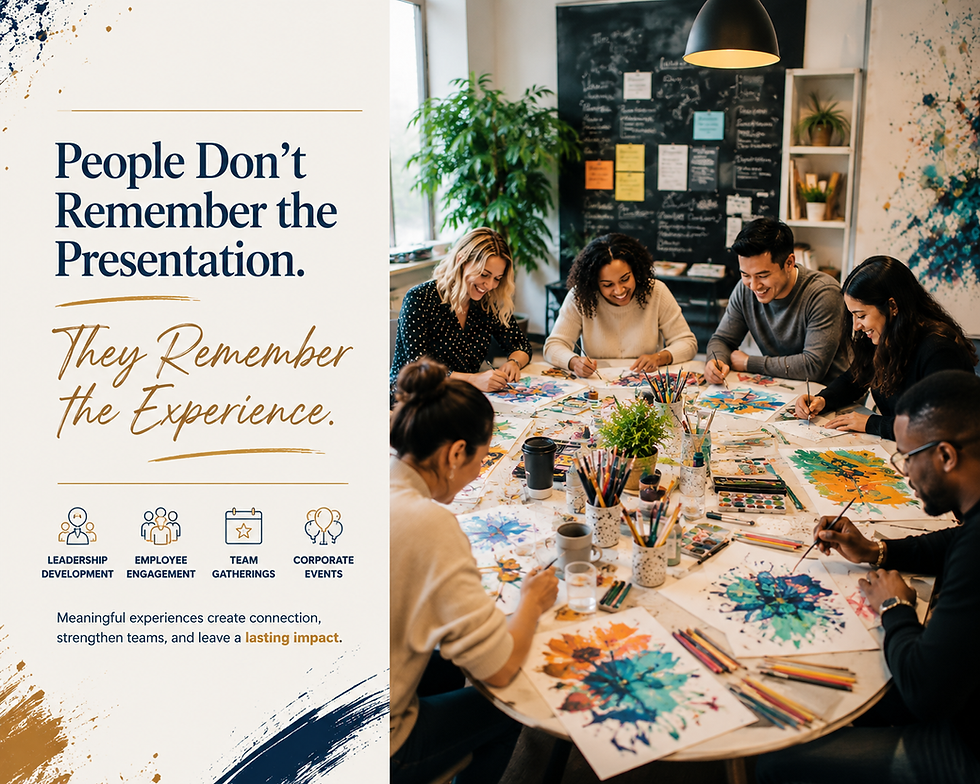
Creative experiences work especially well as icebreaker alternatives because they reduce pressure while still encouraging interaction.
Instead of asking attendees to immediately speak about themselves, creative activities give people something shared to focus on together. Conversation emerges more naturally from the experience itself.
Here are several alternatives that tend to create stronger engagement at corporate events and conferences.

Collaborative Community Canvas
Attendees contribute throughout the event to a large shared artwork. Some add small details. Others spend more time layering color or writing reflections.
The evolving artwork becomes both an activity and a conversation starter. People return to it throughout the day, creating repeated interaction points without awkward introductions.
Creative Prompt Tables
Small tables with guided prompts, sketch materials, collage supplies, or reflection cards create relaxed micro-conversations among attendees.
Instead of formal networking pressure, people connect through curiosity and participation.
Interactive Reflection Walls
Attendees respond visually or anonymously to prompts such as:
“What helps you avoid burnout?”
“What kind of workplace culture do you want more of?”
“What does creativity mean in leadership?”
These installations create emotional engagement while also making conferences feel more human-centered.
Guided Group Art Sessions
Short facilitated creative sessions work especially well during conferences focused on wellness, leadership, education, healthcare, or innovation.
Participants often leave these sessions feeling significantly more connected than after traditional networking mixers.
Sensory Reset Spaces
Large conferences can overwhelm people quickly. Quiet creative reset areas with calming materials, mindful sketching, or collaborative low-pressure activities allow attendees to recharge mentally while still remaining socially connected.
This is especially valuable for introverted attendees who may disengage completely during overstimulating networking environments.
The best conference experiences today recognize something important:
People do not build genuine connection through forced enthusiasm.
They connect through shared moments that feel authentic, relaxed, and emotionally safe.
Creative icebreaker alternatives succeed because they create interaction without demanding performance. They allow people to ease into connection instead of being pushed into it immediately.
Ironically, when attendees stop trying so hard to “network,” the networking often becomes far more meaningful.
And in a conference landscape where attention is increasingly difficult to hold, experiences that feel human tend to be the ones people actually remember.
Victoria Isikman
VFA Creative Events


Comments