

Nervous System Recovery is the 2026 Wellness Buzzword: Here's How Analog Art Fits In

You've probably noticed it.
The tiredness that sleep doesn't fix. The brain fog that lingers through your third coffee. The team members who seem present but not really present.
Something deeper is going on.
And wellness leaders are finally naming it: nervous system dysregulation.
It's not just stress. It's chronic, accumulated, systemic stress that's been building for years. And in 2026, the wellness industry is shifting its entire focus toward one foundational truth:
If the nervous system isn't regulated, nothing else works.
Not the meditation app. Not the ergonomic chair. Not the pizza party.
So what actually helps? That's where things get interesting.
Why "Nervous System Recovery" Is the 2026 Wellness Priority
Experts are calling 2026 "the year of regulation, restoration, and reconnection."
After years of collective burnout, digital overload, and always-on work culture, our bodies are speaking louder than ever. The symptoms showing up across workplaces aren't random: they're signals:
Fragmented sleep
Low-grade anxiety
Difficulty concentrating
Hormonal disruption
Emotional exhaustion
These aren't individual failures. They're nervous system responses to an environment that rarely feels safe enough to rest.
The term gaining traction is neurowellness: the understanding that regulating the nervous system is the primary health bottleneck for most people today.
When your nervous system is stuck in "fight or flight" mode, everything else becomes harder. Decision-making. Creativity. Connection. Trust.
Sound familiar?
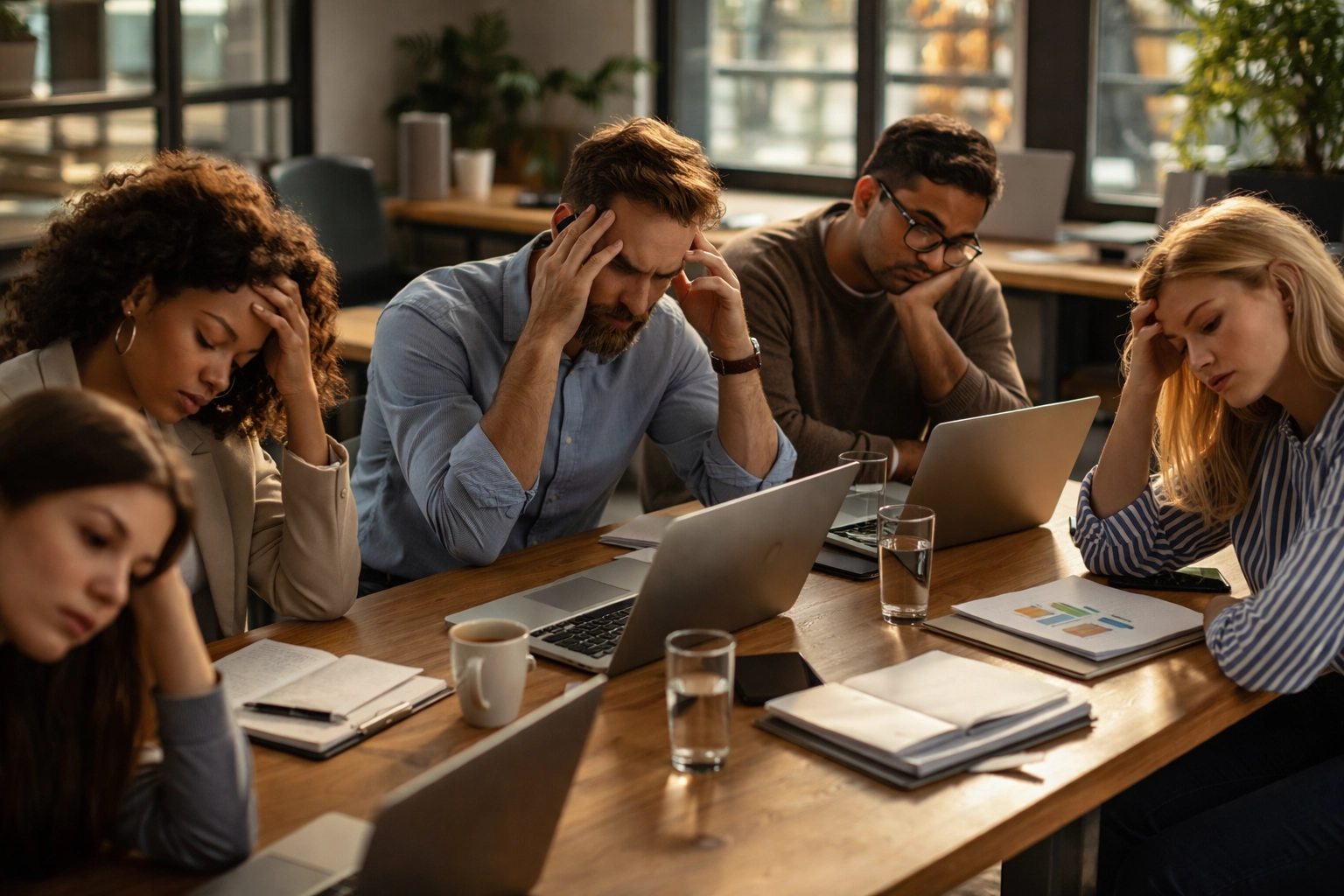
The Problem With Digital Wellness Solutions
Here's the paradox.
Most wellness tools ask burned-out employees to... use more screens.
Another app. Another dashboard. Another notification reminding you to breathe.
But your nervous system doesn't regulate through more input. It regulates through presence. Through slowing down. Through sensory experiences that feel safe, grounding, and real.
This is why 2026 wellness trends are leaning hard into analog, tactile, and nature-based practices:
Forest bathing
Breathwork circles
Somatic therapy
Touch-based healing
Low-stimulation retreats
The common thread? Getting out of the head and back into the body.
And that's exactly where analog art comes in.
How Tactile Art Helps Your Nervous System Shift
Let's talk science for a moment: gently.
Your autonomic nervous system has two main modes:
Sympathetic (fight or flight): activated when you perceive threat, stress, or pressure. Heart rate increases. Muscles tense. Digestion slows. You're ready to react.
Parasympathetic (rest and digest): activated when you feel safe. Heart rate slows. Muscles relax. The body heals, processes, and restores.
Most professionals spend the majority of their workday in sympathetic mode. Deadlines. Slack pings. Back-to-back meetings. Even "fun" team events can feel performative and draining.
The nervous system needs a clear signal that it's safe to shift.
That signal often comes through the senses.
Why Abstract Art Is Uniquely Effective
Abstract art isn't about getting it "right."
There's no image to replicate. No skill to prove. No grade at the end.
This removes one of the biggest stressors in creative activities: the fear of failure.
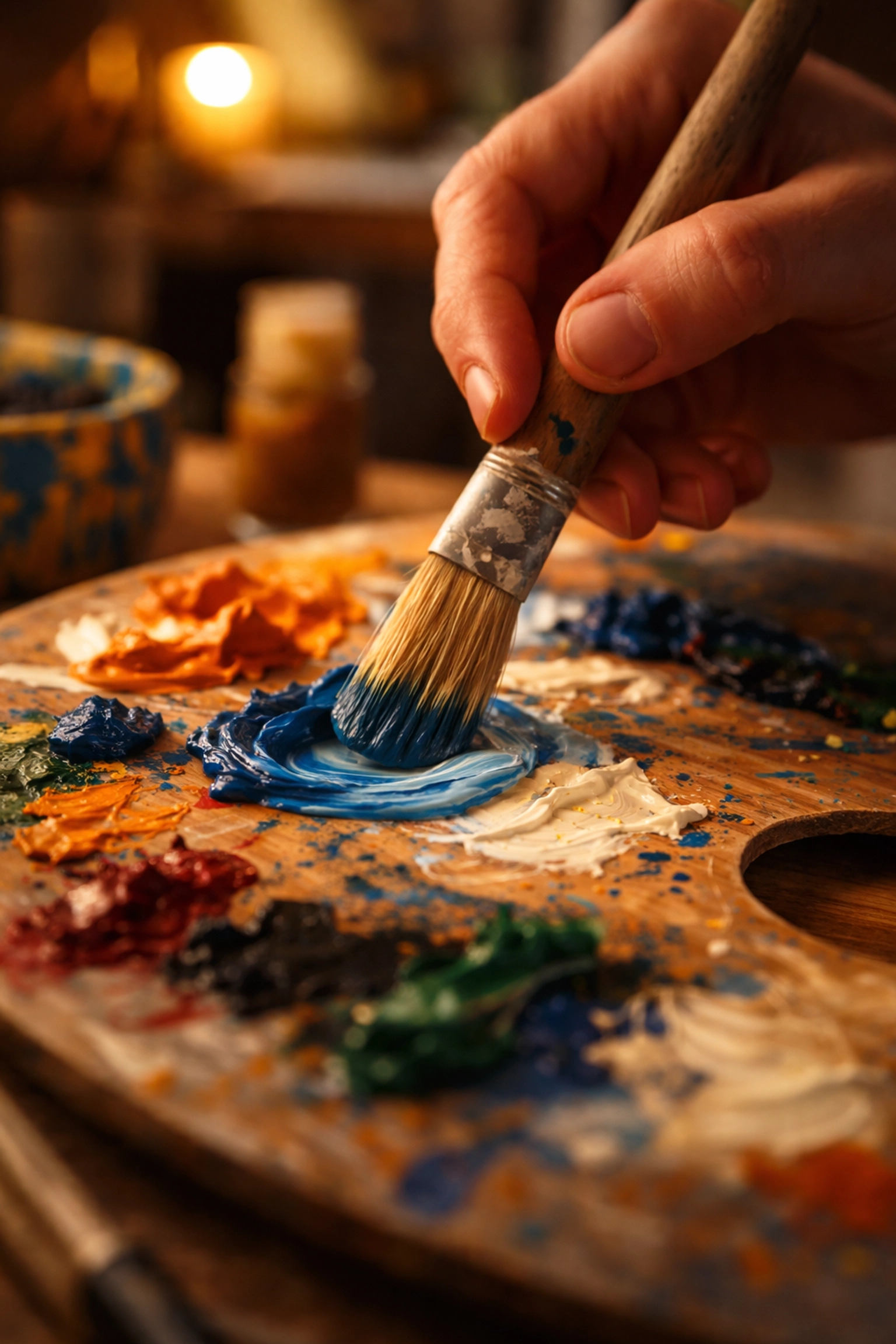
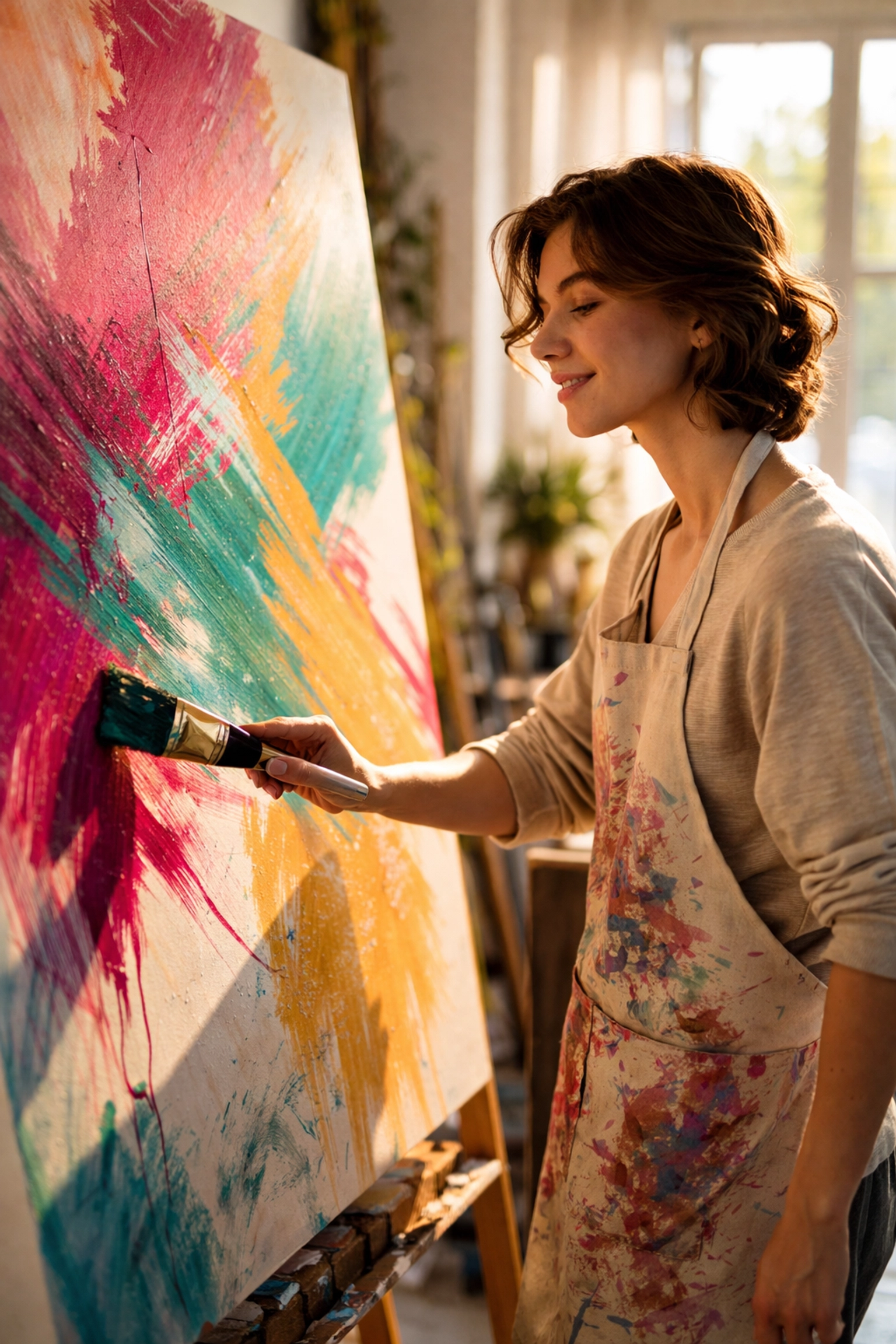
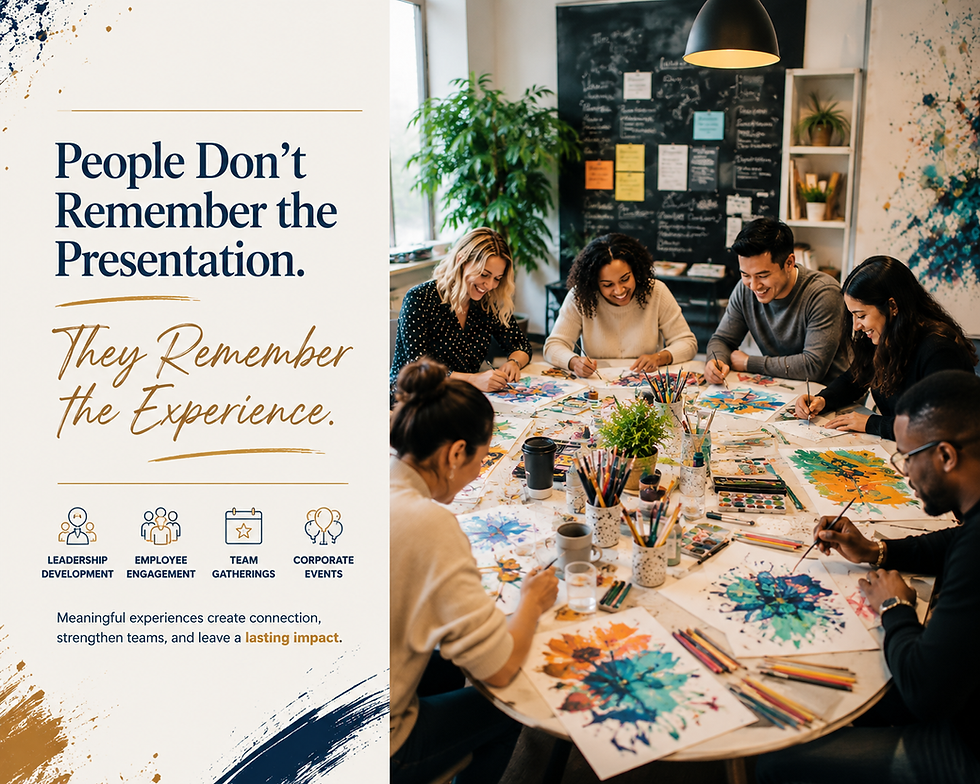
When your team sits down with brushes, paint, and canvas: with no expectation of a perfect outcome: something shifts.
The hands start moving. The breath deepens. The mind quiets.
Here's what's happening neurologically:
✔ Repetitive motion (brushstrokes, blending, layering) activates the parasympathetic system ✔ Tactile sensory input (texture of canvas, weight of the brush, coolness of paint) grounds the body in the present moment ✔ Color and visual rhythm stimulate the brain's reward centers without cognitive overload ✔ Lack of "right answer" removes performance pressure, allowing true relaxation
This isn't art therapy (though it shares some benefits). It's a nervous system reset disguised as a creative experience.
And it works whether someone has painted before or not.
No Experience Required. Really.
We say this a lot, but it's worth repeating:
You don't need to be "artistic" to benefit from this.
In fact, the people who benefit most are often the ones who say, "I'm not creative at all."
Because abstract art isn't about talent. It's about presence.
It's about giving yourself permission to make marks on a canvas without judgment. To play with color because it feels good. To sit in the quiet rhythm of brushstrokes while your nervous system finally exhales.
Your team doesn't need to produce a masterpiece. They just need space to be: without a deliverable attached.
That's the reset.
What This Looks Like in Practice
At VFA Creative Events, we've designed our corporate creative workshops specifically for teams that need more than surface-level bonding.
Our sessions are:
Low-pressure: No art experience needed. No "right" way to participate.
Sensory-rich: Real brushes. Real paint. Real canvas. No screens.
Guided but spacious: We provide gentle instruction, then step back and let the process unfold.
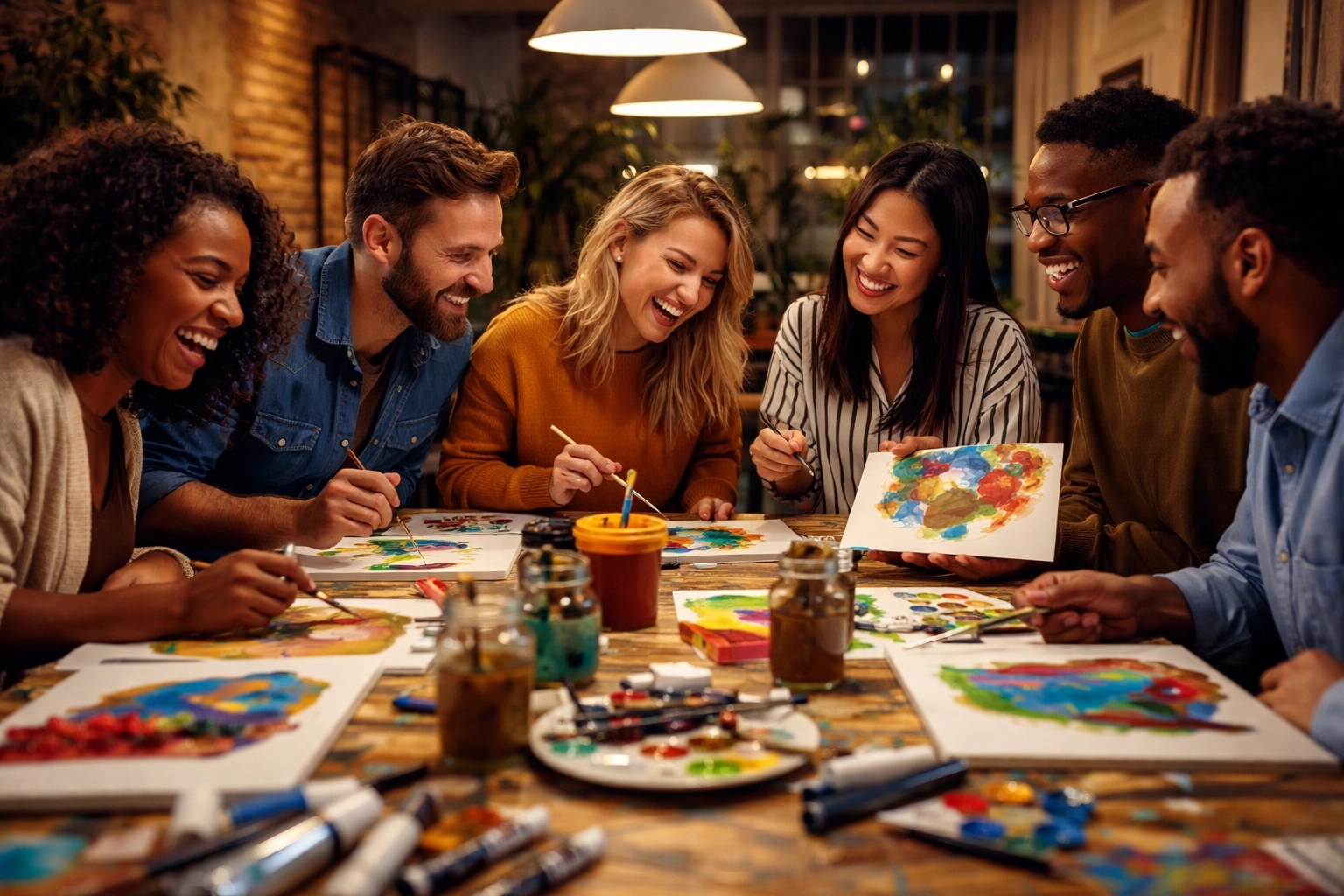
Designed for connection: Teams create together in a way that builds trust sideways: not through icebreakers or forced fun.
The result? People leave feeling lighter. More connected. More human.
Packages That Fit Your Team's Needs
Whether you're planning a quarterly reset, a leadership offsite, or a company-wide wellness day, we have options that scale:
✨ Creative Workshop Perfect for smaller teams or departments looking for an intimate, restorative experience.
✨ Corporate Event Ideal for mid-size gatherings: team retreats, wellness days, or cross-functional bonding sessions.
✨ Large Corporate Event Designed for company-wide experiences that bring entire organizations together through shared creative practice.
Each package includes everything your team needs: materials, guidance, setup, and a calming environment where the only goal is to be present together.
The Shift From Perks to True Wellness
HR and People teams are increasingly asking a better question:
"What actually moves the needle on employee wellbeing?"
The answer isn't more apps. It's not another webinar on stress management. It's not a one-time event that people forget by Monday.
It's consistent, embodied, analog experiences that help the nervous system remember what safety feels like.
That's the shift happening in 2026.
From perks to ecosystems. From productivity hacks to presence. From digital optimization to nervous system recovery.
And creative workshops: real, tactile, no-pressure creative workshops: are becoming a core part of that ecosystem.
An Invitation, Not a Prescription
If your team is running on fumes...
If your wellness programming feels like it's checking a box but not changing anything...
If you're looking for something that actually lands: something your people will feel:
This might be the missing piece.
Not as a one-time novelty. But as a regular practice. A quarterly reset. A signal to your team that their nervous systems matter as much as their output.
We'd love to create that space with you.
Explore our corporate creative workshops →
No pressure. No pitch. Just an open door whenever you're ready.

Comments