

Why a Quarterly Creative Reset Beats a One-Time Pizza Party: The Shift from 'Perks' to Wellness Ecosystems

You've been there.
The email goes out. "Pizza in the break room at noon! 🍕"
Your team shuffles in. They grab a slice. They make small talk about the weekend. Thirty minutes later, they're back at their desks.
Nothing has changed.
The burnout is still there. The disconnection is still there. The quiet exhaustion that lives underneath the surface? Still there.
And you're left wondering: Why doesn't this feel like enough anymore?
Here's the truth HR directors are waking up to in 2026:
One-time perks don't build wellness. They build blood sugar spikes.
The Problem with "Perk Culture"
Let's be honest.
Pizza parties, donut Fridays, the occasional happy hour: these aren't bad things. They're gestures. They signal that someone in leadership thought about the team for a moment.
But gestures don't create lasting change.
They don't address the nervous system fatigue your employees carry home every night. They don't rebuild trust after a hard quarter. They don't give people permission to exhale.
One-time perks are reactive.
They say: "We noticed things are hard. Here's a temporary distraction."
And employees can feel the difference.
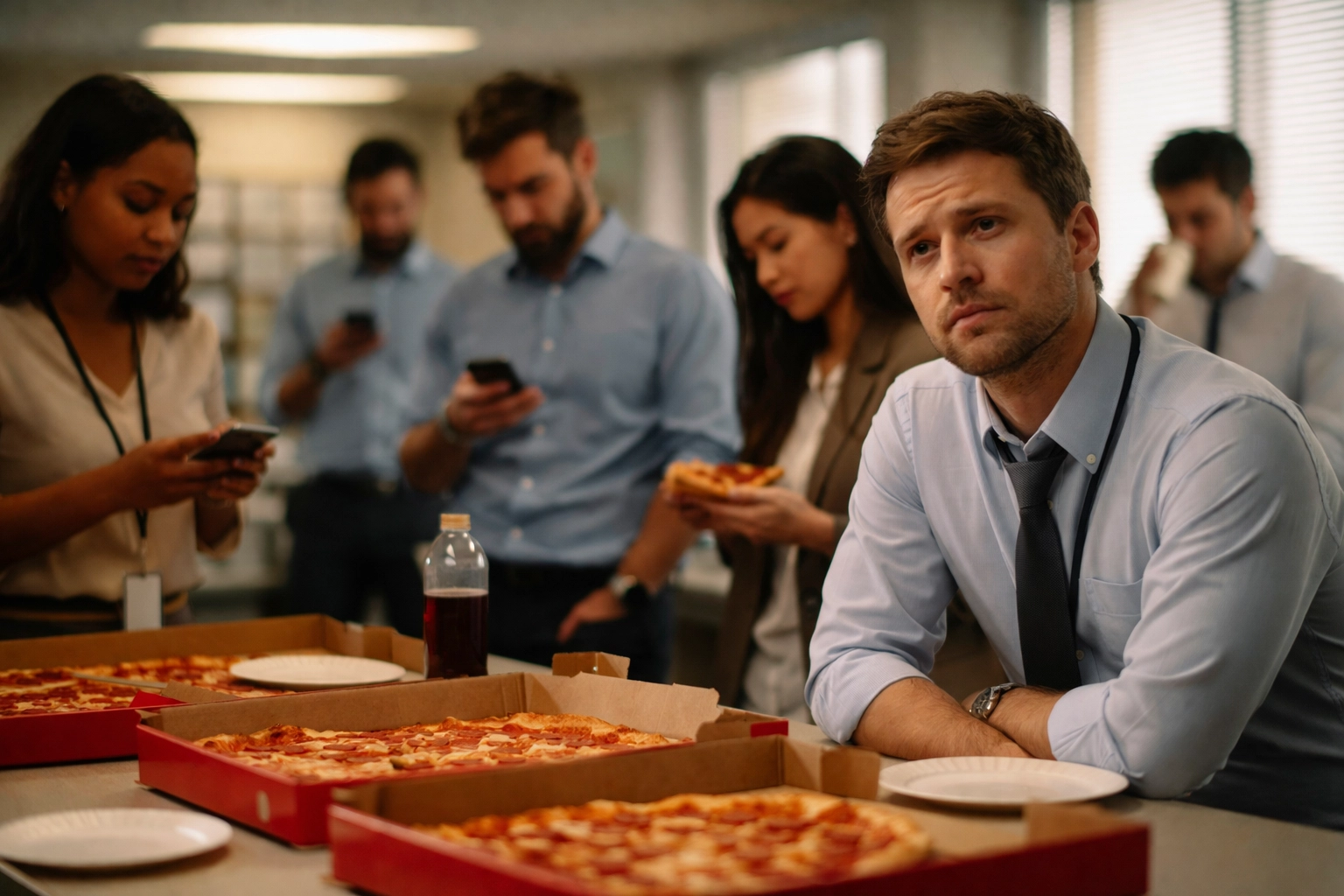
Research on sustained wellness programs confirms what many HR leaders already sense intuitively: isolated gestures lack continuity. They feel performative. Employees quickly lose interest in repetitive, one-off events that don't translate into meaningful support systems.
The pizza gets cold. The moment passes. And everyone goes back to running on empty.
What a Wellness Ecosystem Actually Looks Like
A wellness ecosystem is different.
It's not a single event. It's a rhythm.
It's integrated into your organization's culture: not tacked on as an afterthought. It might include monthly check-ins, quarterly resets, and designated recharge time during high-stress periods.
The key word here? Recurring.
When wellness becomes a rhythm, something shifts.
Employees start to trust that support is coming. They don't have to white-knuckle their way through the quarter hoping someone notices they're struggling. They know there's a built-in pause on the calendar.
That predictability matters more than most leaders realize.
Here's what a wellness ecosystem delivers that one-time perks simply cannot:
✔ Reduced burnout and improved mental health : Designated recharge time helps employees unplug, rest, and reset.
✔ Sustained productivity gains : Healthier, supported employees show up with better focus and reduced absenteeism.
✔ Genuine cultural transformation : A wellness ecosystem signals that people matter more than productivity metrics.
This is the shift from perks to presence.
From gestures to genuine care.
Why Quarterly Creative Resets Work
So what does this look like in practice?
Enter the quarterly creative reset.
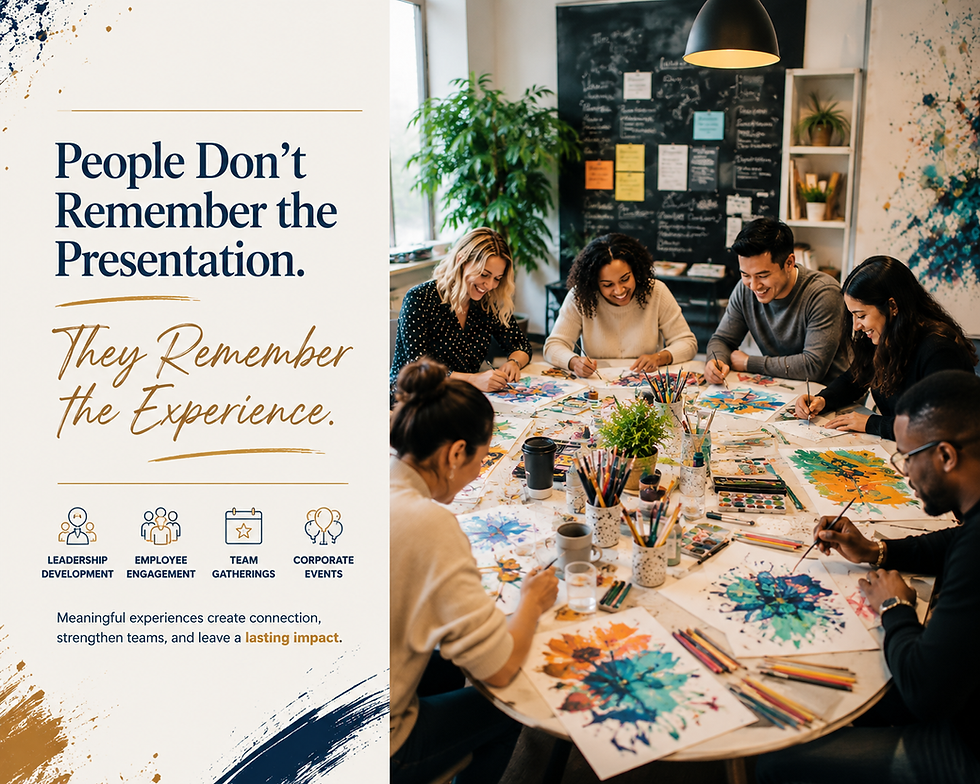
A creative reset is a dedicated experience: usually 60 to 90 minutes: where your team steps away from screens, deadlines, and deliverables. They enter a different kind of space. One built for presence, not performance.

Abstract art workshops are particularly effective here.
Why abstract? Because there's no "right" way to do it.
No one is graded. No one is compared. There's no pressure to create something Instagram-worthy.
Instead, your team is invited to play. To experiment with color, texture, movement. To let their hands do something their brains have forgotten how to do: create without an agenda.
This isn't arts and crafts. This is nervous system recovery.
The Nervous System Piece (And Why It Matters)
Your employees aren't just mentally tired.
They're physiologically depleted.
Chronic stress keeps the nervous system stuck in fight-or-flight mode. Over time, this leads to brain fog, irritability, sleep issues, and that low-grade exhaustion that coffee can't fix.
Creative activities: especially tactile, sensory-rich ones like painting: activate the parasympathetic nervous system. That's the "rest and digest" mode. The one that allows for actual recovery.
When someone picks up a brush and focuses on blending colors, something subtle happens.
Their breathing slows. Their shoulders drop. The mental chatter quiets.
This isn't woo-woo. This is biology.
And when you offer this experience quarterly, you're not just giving your team a nice afternoon. You're giving their nervous systems a chance to recalibrate. Again and again.
That's the difference between a perk and a practice.
The Long-Term Connection Piece
Here's what often surprises HR directors:
The bonding that happens during a creative reset is different from happy hour bonding.
At happy hour, people talk about work. They vent. They gossip. The connection is real, but it's surface-level.
During a creative workshop, something else happens.
People are vulnerable together. They're trying something new. They're laughing at their own "mistakes." They're sharing a sensory experience that doesn't involve performance or competition.

This builds a different kind of trust.
The kind that carries over into Monday morning meetings. The kind that makes hard conversations a little easier. The kind that turns coworkers into collaborators.
And because it happens quarterly, that trust compounds.
Connection becomes culture.
Seasonal Variation Keeps It Fresh
One of the reasons quarterly resets work so well? They can evolve.
Spring might focus on energy and color: bright palettes, movement, renewal themes.
Fall might shift toward grounding and reflection: earthy tones, slower pacing, mindfulness elements.
This seasonal variation keeps the experience fresh. It prevents the stagnation that undermines one-time perks.
Your team isn't showing up to the same thing every quarter. They're showing up to something that meets them where they are.
That's the hallmark of a true wellness ecosystem: it adapts.
What This Signals to Your Team
Let's zoom out for a moment.
When you offer a quarterly creative reset, you're not just booking a workshop.
You're sending a message.
You're saying: "We see you. We know this work is hard. And we're committed to building space for you to breathe: not just once, but regularly."
That message matters.
It tells employees that wellness isn't a PR move. It's a priority.
It tells them that a healthy mind is central to a thriving workforce: not a nice-to-have.
And in a landscape where burnout rates are climbing and return-to-office resistance is real, that message can be the difference between retention and resignation.
The Shift Is Already Happening
More and more organizations are moving away from reactive gestures.
They're building proactive cultures.
They're replacing the one-time pizza party with something deeper. Something that actually lands.
If you're an HR director reading this, you already sense it.
The old playbook isn't working anymore.
Your people need more than perks. They need presence. They need permission to pause. They need creative space to remember they're human: not just employees.
A quarterly creative reset can be that space.
Ready to Explore What This Could Look Like for Your Team?
You don't have to overhaul your entire wellness strategy overnight.
Start with one quarter. One workshop. One experience where your team gets to exhale together.
See what shifts.
If you're curious about how abstract art workshops can fit into your organization's wellness rhythm, let's talk.
No pressure. No hard sell.
Just a conversation about what your team actually needs: and how creativity might be part of the answer.


Comments