

Why Creative Activities Improve Employee Engagement

Employee engagement is often discussed in terms of productivity, retention, and performance metrics. But underneath all those business terms is something much simpler:
People want to feel connected to what they do and to the people they do it with.
When employees become disengaged, it’s usually not because they suddenly stopped caring overnight. More often, they became emotionally disconnected through repetition, stress, isolation, or constant pressure to produce.
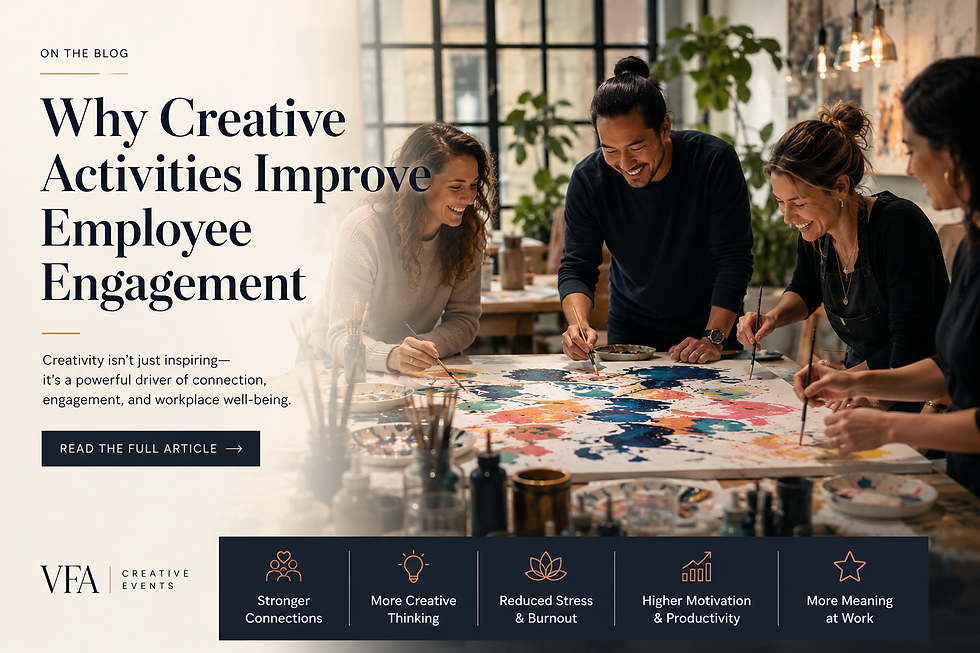
Creative activities help restore some of that lost connection.
Not because creativity is trendy. And not because every workplace needs a paintbrush and a playlist. Creativity matters because it activates parts of people that typical work environments often ignore completely.
Most employees spend their days solving problems analytically. Emails. Spreadsheets. Meetings. Timelines. Metrics. The brain stays in continuous output mode. Over time, this creates mental fatigue and emotional flattening.
Creative experiences interrupt that cycle.
When employees participate in collaborative art activities, guided creative workshops, or hands-on group experiences, several things begin happening naturally:
Stress levels decrease
Informal communication increases
Participation becomes more balanced
People interact outside their usual workplace roles
One of the most overlooked aspects of employee engagement is psychological safety. People engage more when they feel comfortable expressing themselves without fear of judgment.
Creative workshops can help build that environment because there’s no single “correct” outcome.
In a brainstorming meeting, employees may hesitate to speak up because they fear sounding wrong. But during a collaborative creative activity, experimentation becomes normal. People loosen up. Conversations become more human. That openness often carries back into workplace interactions afterward.
Creative activities also support employee engagement because they create shared experiences.

Teams spend a lot of time working near each other without actually connecting. Many workplaces today are highly functional but emotionally disconnected. Shared creative experiences create memory. And memory creates belonging.
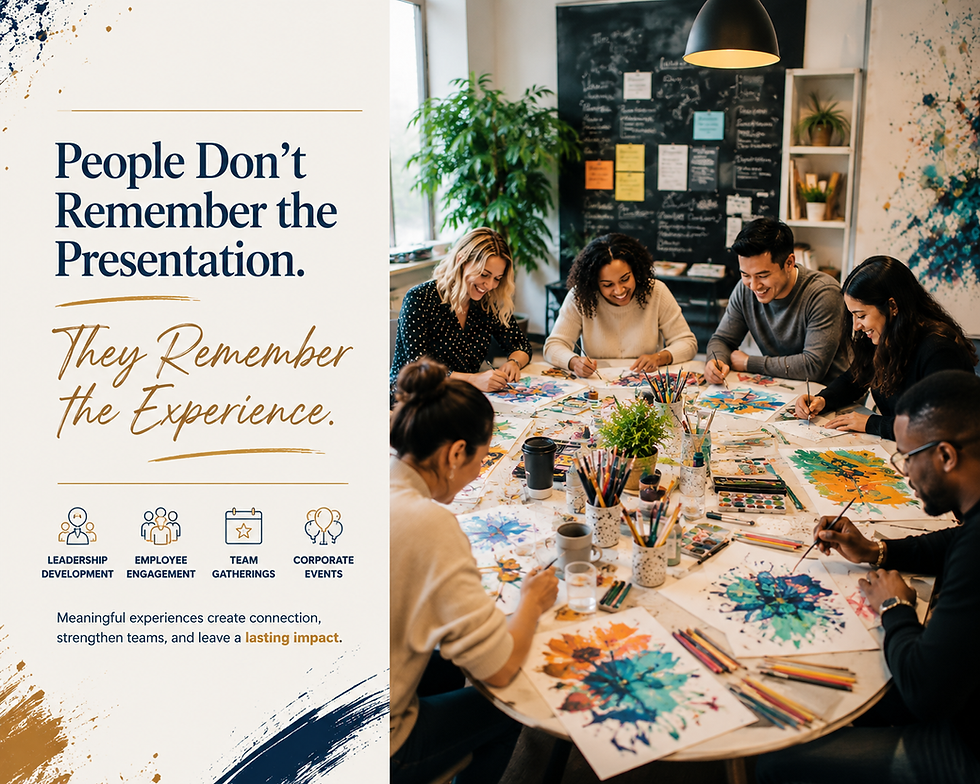
Months later, employees may not remember a quarterly presentation, but they’ll remember laughing together while creating a group mural during a stressful project season.
That matters more than companies sometimes realize.
Another reason creative experiences improve engagement is accessibility. Traditional team-building activities can unintentionally exclude people who dislike competition, public speaking, or physically demanding events.
Creative experiences tend to be more inclusive because they allow multiple forms of participation. Some employees engage verbally. Others contribute quietly through the process itself. There’s room for different personalities to participate comfortably.
This becomes especially important in hybrid and post-pandemic workplace cultures where many employees are still rebuilding interpersonal comfort.
It’s also worth mentioning that creativity naturally encourages curiosity. Curious employees tend to engage more deeply with both people and ideas. When teams experience curiosity together, collaboration becomes less mechanical and more dynamic.
The goal is not to turn employees into artists.
The goal is to create environments where people can feel present, connected, and mentally refreshed long enough to re-engage with each other in a healthier way.
And sometimes, surprisingly small creative moments can shift the emotional atmosphere of an entire team.
Victoria Isikman


Comments